Woman Eating Meal on Train Causes Stir in S. Korea
6
Intermediate
Vocabulary
Repeat each word, definition, and example sentence after your tutor.
complaintNounkəmˈpleɪnt
a statement that says something is not acceptable or satisfactory; a reason for not being satisfied
Police shut down the house party after several noise complaints. 
rudeAdjectiveruːd
not polite or having bad manners
You have to be polite even when dealing with rude or difficult customers.
banVerbbæn
to officially or legally not allow something
The city council voted to ban smoking in public places.
unsanitaryAdjectiveʌnˈsænəteri
dirty and likely to spread germs or cause illness
The restaurant was forced to close because it was deemed unsanitary.
discomfortNoundɪsˈkʌmfərt
a feeling of worry, unease, or embarrassment
I could sense her discomfort when I asked about her previous employer. 
announcementNounəˈnaʊnsmənt
a public statement informing people about something
The announcement caused a lot of confusion.
Article
Read the article aloud on your own or repeat each paragraph after your tutor.Woman Eating Meal on Train Causes Stir in S. KoreaA photo of a woman eating a meal has gotten people talking in South Korea after going viral online. The woman was seen sitting down with dishes on her lap, eating boiled pork, kimchi, and even a bowl of soup.
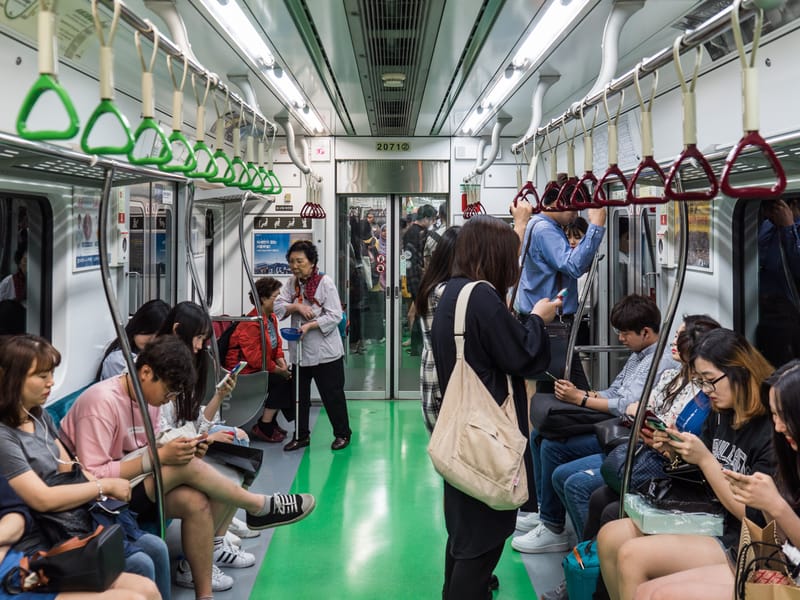
But what surprised people wasn't the food the woman was eating — it was where she was eating it, because the picture was taken on a subway train in Seoul.
According to data from Seoul Metro, nearly 4,200 complaints about people eating food and drinking on the subway have been made over the last five years.
People mentioned other passengers eating food with strong smells, such as blood sausage, kimchi, dried squid and cup noodles. In their complaints, some people said the smells made them feel sick.
Others said they saw passengers drinking alcohol on the train, such as beer or soju.
In South Korea, eating or drinking on public transport is seen as rude. In fact, Seoul banned food and drink on city buses in 2018.
But on the subway, the situation is less clear. Seoul Metro's rules say that passengers are not allowed to bring anything onto the train that is unsanitary, or that causes discomfort to other passengers because of its strong smell.
But some complaints said that people kept eating, even after listening to train announcements asking them not to do so.
Now, some officials say it might be time to make clearer rules for the subway, just like the ones used for buses. And with the large number of complaints being made each year, the city could soon decide to just ban all food and drink on trains.
Discussion
Have a discussion based on the following questions.- What was the woman in the photo eating?
- How many complaints about eating and drinking on the subway were reported in Seoul over the past five years?
- When did Seoul ban food and drink on city buses?
Further Discussion
Have a discussion based on the following questions.- Do you often see people eating or drinking on public transport?
- Do people usually follow public transport rules where you live?
- What behaviors do you find most annoying on public transport?
- Do you ever come across rude passengers on public transport?
- What are people's main complaints about public transport in your town or city?