Why Spicy Food Burns — and Why Some People Love It
6
Intermediate
Vocabulary
Repeat each word, definition, and example sentence after your tutor.
graduallyAdverbˈgræʤuəli, ˈgræʤuli
slowly over time
As you can see, our numbers are improving gradually.
chemicalNounˈkɛmɪkəl
a substance or compound, especially one that has been artificially made
THC is the chemical in cannabis that makes people feel high.
evolveVerbɪˈvɑːlv
to develop and adapt over time
The bird's bright feathers may have evolved to attract females.
receptorNounrɪˈseptər
an organ or cell that can respond to external stimulus and send a signal to a nerve
Dogs' noses have around forty times more smell-sensitive receptors than ours.
signalNounˈsɪgnl
information that is sent or received
Painkillers work by blocking signals to our pain receptors.
geneNoundʒiːn
a section of DNA that controls a particular characteristic or quality in a living thing
The gene for blue eyes first appeared between 6,000 and 10,000 years ago.
Article
Read the article aloud on your own or repeat each paragraph after your tutor.Why Spicy Food Burns — and Why Some People Love ItThere's a popular show on YouTube called Hot Ones, where celebrities answer questions while they eat chicken wings that get gradually spicier. The spicier the wings get, the more difficult it is to answer the questions!
While it's fun to watch, some people might think: Why are they doing this? And why do people eat spicy food, even though it can be painful?
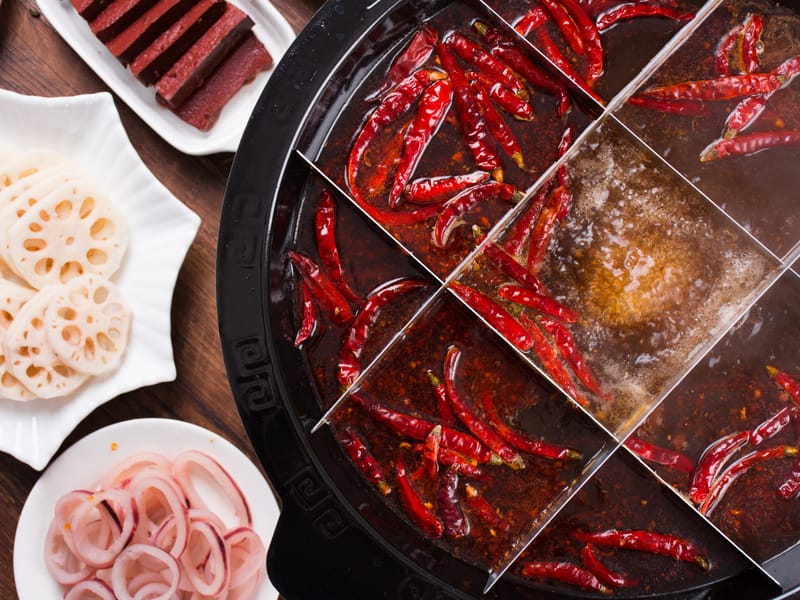
We're not really supposed to like spicy food. It's not even a taste, like sweet or salty. Capsaicin, the chemical that makes things spicy, actually evolved as a way to stop animals from eating certain plants, like chili plants.
But humans started eating them anyway — and enjoying them.
Capsaicin activates a receptor in our bodies called TRPV1 ("trip-vee-one") — a receptor that's also activated by heat. Capsaicin can trick this receptor into sending burning signals to the brain, even when the food isn't actually at a high temperature.
Some people have different versions of the TRPV1 gene that can make spicy food less painful to eat. And like with other things, the more spicy food we eat, the more used to it our bodies get.
But researchers say some people might actually enjoy that painful feeling. It's similar to when people do something that can be dangerous, like going on a roller coaster or driving fast. At first, our brain thinks it's dangerous, but when it learns that it's safe, it enjoys that feeling.
And although not everyone enjoys it, studies have found that eating spicy food often can be good for us.
But if you eat too much of it and it feels like your mouth is on fire, don't try to make it better by drinking water! It doesn't help, because capsaicin doesn't mix with water. Instead, have milk or yogurt — or treat yourself to ice cream!
Discussion
Have a discussion based on the following questions.- Do you like spicy food? Have you always liked it?
- What are some of the spiciest dishes you've had? Would you have them again?
- How spicy is your country's traditional cuisine?
- Do you know anyone who can't handle spicy food at all?
- Have you watched Hot Ones before? Would you find it easy to have a conversation while eating very spicy food?
Further Discussion
Have a discussion based on the following questions.- How has your taste in food changed over the years?
- How adventurous are you when it comes to trying new food?
- Who are the biggest foodies you know?
- Are there any foods or flavors you grew to like over time?
- Have you tried any new dishes recently?