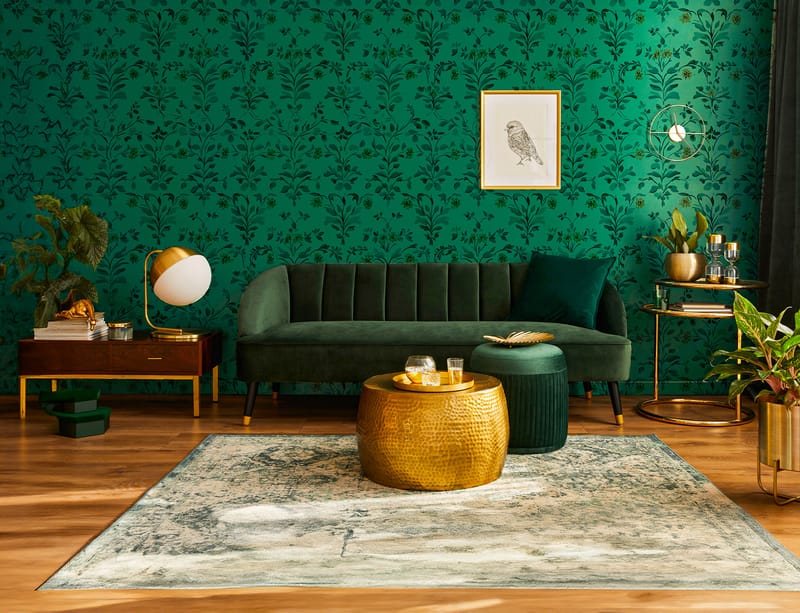
Patterns and Poison: The Secret Life of Wallpaper
8
Advanced
Vocabulary
Repeat each word, definition, and example sentence after your tutor.
initiallyAdverbɪˈnɪʃəli
at the beginning of a process, situation, etc.
D.H. Lawrence's 1928 novel "Lady Chatterley's Lover" was initially censored for being indecent.
tapestryNounˈtæpəstri
a large piece of thick fabric with designs or pictures that is hung on a wall
Made in the 11th century, the Bayeux Tapestry features 58 scenes of the Norman Conquest of England.
aristocracyNounˌærɪˈstɑːkrəsi
the highest social class in some societies, usually made up of people related to a royal family
Marie Antoinette was the last queen of France before the aristocracy was overthrown.
extravagantAdjectiveɪkˈstrævəgənt
very fancy and expensive
I think extravagant wedding parties are a bit of a waste of money.
arsenicNounˈɑːrsnɪk
a chemical element that is a grey metalloid and very poisonous
Cigarettes contain many harmful substances, including arsenic and benzene.
vibrantAdjectiveˈvaɪbrənt
(of color) strong and bright
We decided to go with vibrant colors for our living room decor.
Article
Read the article aloud on your own or repeat each paragraph after your tutor.Patterns and Poison: The Secret Life of WallpaperPatterns and Poison: The Secret Life of Wallpaper
"Wallpaper is back," Vogue wrote in 2021. And while some people never thought it had gone away, fashion magazines and websites agree that wallpaper is cool again.
It wasn't always that way. But this style of home decoration has an interesting, and very long, history.
It's believed that people in China first invented wallpaper, having stuck rice paper to their walls more than 2,000 years ago. And the fashion reached Europe in the 16th century.
There's still a surviving piece of European wallpaper from as long ago as 1509. This was a time when designs from expensive fabrics were carefully copied onto small sheets that were hung almost as art, or used to decorate the insides of cupboards in the homes of European merchants.
Some initially considered them to be cheap versions of tapestries — from which designs were also copied — but producing wallpaper was still difficult and time-consuming.
In the 17th century, producers began joining single sheets of paper together to make longer rolls that could cover larger spaces of wall.
Then the first wallpaper printing machine was invented in France in 1785, making production easier. Wallpaper became popular among the French aristocracy, who ordered extravagant patterns to decorate their rooms.
Technological advances — including cheaper dyes — later made wallpaper more readily available to the European public. But there was a deadly downside to the mass production of those brightly colored designs.
Manufacturers in Britain were using arsenic to make their colors more vibrant. And in the damp homes of the UK, that wallpaper released a toxic gas that slowly poisoned homeowners. It was only removed from production around the end of the 19th century.
But this didn't put off the public — wallpaper was here to stay.
However, in the late 20th century, painted walls became more fashionable, and some considered wallpaper to be a dated form of decoration. But that view now appears to have changed yet again.
Wallpaper is not only back — as interior designer Martyn Laurence Bullard told Vogue in 2021, it is "hotter than ever."
Discussion
Have a discussion based on the following questions.- How do you feel about wallpaper? Do you have any in your home?
- If you were choosing wallpaper for your home, what styles or patterns would you consider?
- How would you describe your interior decorating style?
- If you were to completely renovate your home, what style would you go for?
- Do you like to keep up with the latest home decor and interior design trends?
Further Discussion
Have a discussion based on the following questions.- What's the coolest house or building you've been in?
- Which of your friends or family has the best design sense?
- Are there any rooms in your home you'd like to redecorate?
- Have you done any DIY projects around the house? How did they turn out?
- The best rooms have something to say about the people who live in them. — David Hicks. What are your thoughts on this quote?