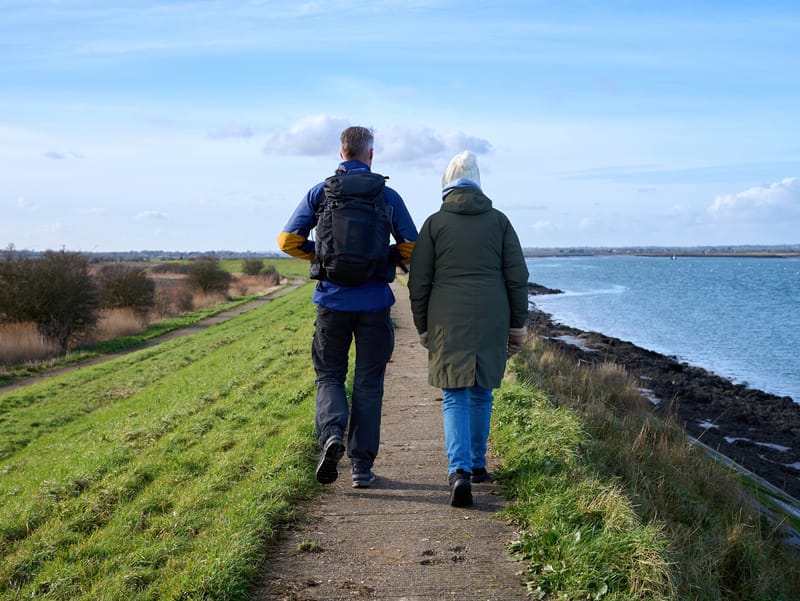
One Long Walk May Be Best for Heart Health
5
Intermediate
Vocabulary
Repeat each word, definition, and example sentence after your tutor.
stepNounstɛp
a movement of putting one foot in front of the other to walk or run
According to my pedometer, I have already walked 10,000 steps today.
targetNounˈtɑːrgɪt
a goal or result that efforts are directed towards
Japan has set a target to be carbon neutral by 2050.
protectVerbprəˈtɛkt
to stop someone or something from being harmed, damaged, etc.
We covered all the furniture with plastic sheeting to protect it while painting. 
lastVerblæst
to continue for a specified period of time
Soccer games last for 90 minutes, not including half-time.
riskNounrɪsk
the possibility of something bad happening
A poor diet and a lack of physical exercise increase your risk of developing diabetes.
burnVerbbɜːrn
to use something as a form of fuel or energy
You can raise the incline on your treadmill if you want to burn more calories.
Article
Read the article aloud on your own or repeat each paragraph after your tutor.One Long Walk May Be Best for Heart HealthMany of us have apps or watches that count how many steps we take. You might even have a target number of steps for each day or each week.
But according to a new study, if you want to protect your heart, you actually don't need to worry too much about counting steps — just try to make sure you walk for a long time all at once!
An international team of researchers found that taking walks of 15 minutes or more could be really good for your heart health. And that may be true even for people who don't take many steps when they walk.
The researchers studied more than 33,000 adults aged between 40 and 79. All of them took fewer than 8,000 steps per day.
They looked at how long people walked at a time. Many took walks that lasted less than five minutes, while others walked for 15 minutes or more. The researchers also looked at people's heart health over an eight-year period.
They found that people who took longer walks all at once were less likely to have heart problems or die during that eight-year period. Even people who took 5,000 steps or fewer per day were able to reduce their risk by taking longer walks.
The researchers said that it might be good to take one longer walk instead of several short walks.
However, short walks can also be good for our health. Previous studies have found that we may burn more calories on short walks.
And doing a little exercise is always better than not doing any!
Discussion
Have a discussion based on the following questions.- How many people did the study involve? A. 15,000 B. 33,000
- 15,000
- 33,000
- How many steps did the participants take each day? A. Fewer than 5,000 B. Fewer than 8,000
- Fewer than 5,000
- Fewer than 8,000
- How long did the researchers track people's heart health? A. Eight years B. 10 years
- Eight years
- 10 years
Further Discussion
Have a discussion based on the following questions.- What are your thoughts on the study's findings?
- How much walking do you usually do in a day?
- Do you use any apps or devices to track your steps or exercise?
- How often do you go for long walks?
- Do you find it easy to fit walking or exercise into your daily routine?