More than 800 Million People May Have Diabetes
6
Intermediate
Vocabulary
Repeat each word, definition, and example sentence after your tutor.
diabetesNounˌdaɪəˈbitiz
a medical condition in which the body cannot control how much sugar is in the blood
You are more likely to develop diabetes if one of your family members has the disease.
treatmentNounˈtriːtmənt
something that is done to try and fix a medical problem
My hand required treatment at the hospital.
preventVerbprɪˈvɛnt
to stop something
You should always warm up before running to prevent injuries.
ambitiousAdjectiveæmˈbɪʃəs
having or showing a strong desire to succeed; (of a plan) difficult to achieve because it is trying to achieve a large goal
I'm not surprised that Jess became a lawyer; she's always been very smart and ambitious.
policyNounˈpɑːləsi
a plan or rule put in place or proposed by an organization or government
The set of new policies is aimed at addressing racial inequities in the healthcare system.
affordableAdjectiveəˈfɔːrdəbl
having a low or reasonable price
I'm looking for a new car that is affordable.
Article
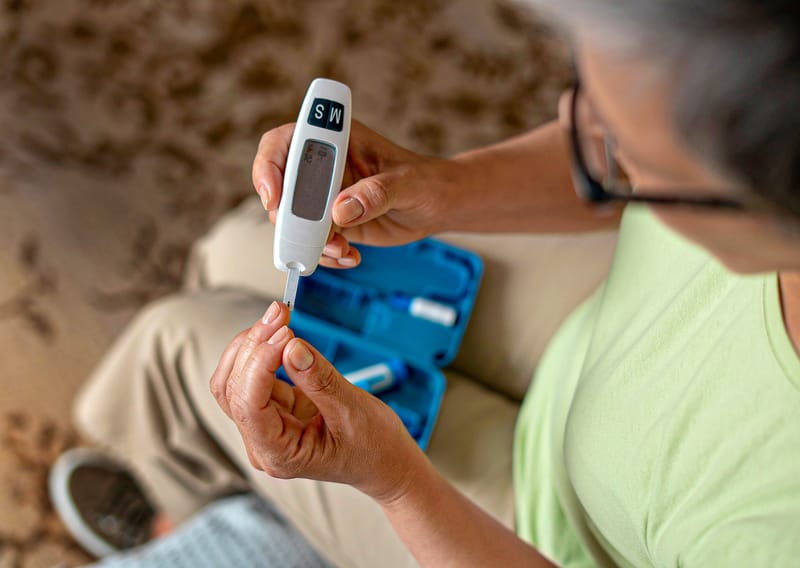
Read the article aloud on your own or repeat each paragraph after your tutor.More than 800 Million People May Have DiabetesMore than 800 million people around the world may have diabetes, according to new research.
But almost 60% of adults aged 30 or over with diabetes might not be getting the treatment they need.
Working with the World Health Organization, a global research team estimated that the number of people living with diabetes doubled between 1990 and 2022 — from 7% to 14%.
Across the world, rates of diabetes in poorer countries have increased the fastest, according to researchers.
The places with the highest rates of diabetes included island nations in the Pacific and the Caribbean, as well as countries in North Africa and the Middle East.
In the worst affected nations, more than a quarter of adult men and women were estimated to be living with diabetes.
And in some poorer nations, more than 90% of people weren't getting treatment. Diabetes can lead to a number of other serious health problems.
The world's largest countries — India and China — had the highest numbers of people with diabetes. In 2022, there were an estimated 212 million people in India and 148 million in China with either type 1 or type 2 diabetes.
In the US, 11% of women and 14% of men were living with diabetes in 2022 — for a total of 42 million people.
Most people with diabetes have type 2, which can often be prevented by eating healthily and getting exercise.
Ranjit Mohan Anjana, who was involved with the research in India, said more ambitious health policies are needed, especially in poorer countries.
These include making healthy foods available and affordable for everyone, and giving schoolchildren free, healthy school meals.
He added that governments should make sure there are safe places for people to walk and exercise, and give free entry to public parks and fitness centers.
Discussion
Have a discussion based on the following questions.- How did the number of people living with diabetes change from 1990 to 2022?
- Which areas of the world have the highest rates of diabetes?
- How many people in the US were living with diabetes in 2022?
Further Discussion
Have a discussion based on the following questions.- What are your thoughts on the findings of this research?
- Why do you think so many more people have diabetes now than in the past?
- Is diabetes a common health problem in your country? Do you imagine it's increased over the past few decades?
- Do you find it concerning that so many people with diabetes are not getting the right treatment?
- Do you think providing free access to parks and fitness centers could help reduce diabetes rates?