Good Enough to Eat: The History of Japanese Food Models
8
Advanced
Vocabulary
Repeat each word, definition, and example sentence after your tutor.
foamingAdjectivefəʊmɪŋ
(of a liquid) producing a mass of small bubbles
After the hike, all I could think about was sitting down with a tall glass of foaming beer.
shreddedAdjectiveˈʃrɛdɪd
cut into small, thin pieces
Add some shredded cheese to the omelette before folding it over.
stallNounstɔːl
a table or small shop where things are sold, often found in markets
There were hundreds of stalls at the festival, selling everything from food to clothing.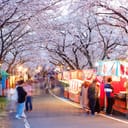
artificialAdjectiveˌɑrtəˈfɪʃəl
made by people, rather than being natural
Many sports fields use artificial grass because it requires less maintenance.
waxNounwæks
a thick, sticky substance made from beeswax, fats, and oils, used for making candles, polish, etc.
We visited a wax museum when we were in Budapest. 
moldNounmoʊld
a hollow container used to give shape to hot liquid material when it cools down and becomes hard
Don't forget to grease the molds before adding the mixture.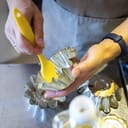
Article
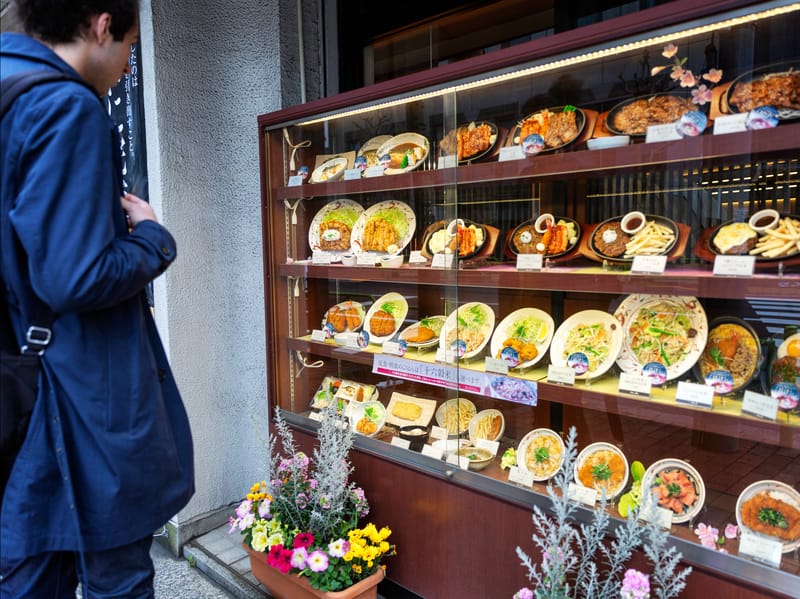
Read the article aloud on your own or repeat each paragraph after your tutor.Good Enough to Eat: The History of Japanese Food ModelsA perfectly fried egg. A foaming glass of beer being poured from a can of Yebisu. A fresh plate of tonkatsu with a side of shredded cabbage. It all looks good enough that you want to have it right away — but none of it is real.
Welcome to the world of Japanese food models, or shokuhin sampuru. These can be found in glass cabinets outside many Japanese restaurants — there to get people who are walking by interested in the food inside.
In the 1800s, food stalls in Japan would put out a plate of real food to show people what they could expect to eat — but a new one had to be made each day.
It's believed that the first artificial food model was made in 1917. But they didn't become widely known until they were displayed at the Shirokiya department store in Nihonbashi, Tokyo, in 1923, when it was being rebuilt after the Great Kanto Earthquake.
People could look at the models and buy tickets for what they wanted to eat, making ordering more efficient. After that, meal tickets and food models became popular around Japan.
The models became even more useful after World War II, since American soldiers in the country couldn't read Japanese menus, but could point to the models of the food they wanted. They also helped show Japanese people what new Western dishes coming into the country looked like before they ordered them.
They're now so well known that they're sold as souvenirs, and small food models can be taken home as keychains, bookmarks and more.
The first food models were made from wax, but this was not very strong, and would melt in the sun.
By the 1970s, most were being made from plastic — which is more expensive, but lasts longer. It's set in silicone molds, and while the plastic's color can be changed to match different types of food, the details are still painted by hand.
Discussion
Have a discussion based on the following questions.- What did you know about Japanese food models before reading this article?
- Do a lot of restaurants use food models in your town or city?
- Do you ever use food models or pictures to decide on a restaurant?
- When was the last time you ordered a meal that wasn't what you expected?
- Have you ever had trouble ordering food abroad?
Further Discussion
Have a discussion based on the following questions.- What restaurants in your town or city would you recommend to visitors?
- Do you like trying new things at restaurants or sticking to your favorites?
- Have you discovered any interesting new dishes lately?
- What's the best homemade meal you've had recently? Who made it?
- Your body is not a temple, it's an amusement park. Enjoy the ride. — Anthony Bourdain. What are your thoughts on this statement?