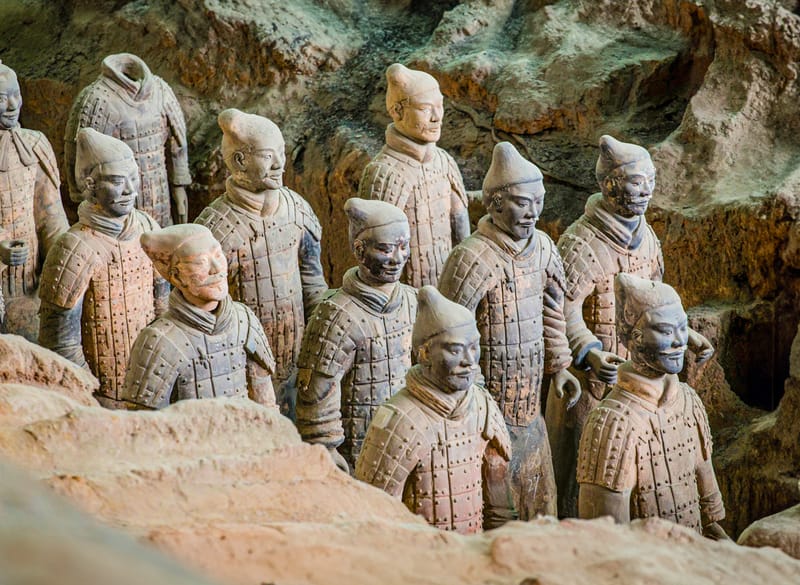
China's Silent Soldiers: What Is the Terracotta Army?
8
Advanced
Vocabulary
Repeat each word, definition, and example sentence after your tutor.
excavationNounˌekskəˈveɪʃn
the act of removing buried objects from the ground
All of these artifacts were collected during an archaeological excavation in the 1990s.
archaeologistNounˌɑrkiˈɑləʤɪst
a person who studies human history by finding and examining objects buried in the ground
Archaeologists have found hundreds of fragments of Roman pottery on the site.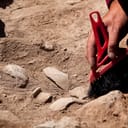
trenchNountrentʃ
a long, narrow hole in the ground, especially one that provides shelter for soldiers during a war
Elaborate trenches were used along the Western Front during World War 1.
declareVerbdɪˈklɛr
to state something officially or publicly
Ptolemy declared himself pharaoh of Egypt in 305 B.C.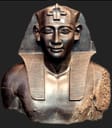
dynastyNounˈdaɪnəsti
a series of rulers from the same family
Saladin ruled Egypt and Syria for 19 years and founded the Ayyubid dynasty.
artifactNounˈɑːrtəˌfækt
an object made by a person, especially a very long time ago
These artifacts come from the pre-Columbian era and were made around the year 600.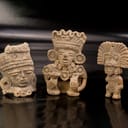
Article
Read the article aloud on your own or repeat each paragraph after your tutor.China's Silent Soldiers: What Is the Terracotta Army?In China's Shaanxi province, in the northwest of the country, thousands of soldiers stand side by side — still, silent, and guarding the tomb of one of the country's great emperors. For more than 2,000 years, they remained hidden and forgotten.
Most people around the world today will have heard of China's Terracotta Army — a collection of life-size statues made of terracotta, which is a type of baked brown clay. But in 1974, they were discovered by accident by a group of farmers digging a well in Lintong County, about 35 kilometers from the city of Xian.
The Chinese authorities began an excavation of the site not long after. Within a few months, more than 500 statues had been discovered.
As the excavations continued, archaeologists discovered a huge system of corridors in trenches covering an area of 56 square kilometers.
The corridors are filled with statues of soldiers and horses, all protecting the tomb of the emperor Qin Shi Huang, who declared himself the first emperor of China in 221 BC, and died in 210 BC.
The statues have unique physical features and are organized by rank. They are mostly gray today, although some of them have paint marks, which means they could have originally been painted to have colorful clothes.
Little was recorded about these statues, but the writings of a court historian in the following Han dynasty revealed that construction began shortly after Qin Shi Huang became emperor. Historians estimate it took more than 700,000 workers about 40 years to build the army.
To date, about 2,000 statues — and tens of thousands of bronze weapons — have been excavated, and the site is open to visitors wanting to see the army in person.
Archaeologists estimate there could be as many as 8,000 statues in total, and it could take many, many years to excavate them all.
Qin Shi Huang's tomb, however, has never been touched, in part out of respect, but also because of fears of damaging the artifacts that may be inside.
Discussion
Have a discussion based on the following questions.- Would you like to see the Terracotta Army in person someday?
- Do you know much about ancient Chinese history?
- Have you been to any famous historical sites?
- What are some of the most-visited historical sites in your country?
- What famous historical artifacts do you hope to see in person someday?
Further Discussion
Have a discussion based on the following questions.- Who's the biggest history buff you know?
- What country's history do you find most fascinating?
- What parts of your country would you recommend to history lovers?
- Have there been any exciting archaeological discoveries in your country in recent years?
- What do you imagine it'd feel like to make a major archaeological discovery?