All Green Lights: How Copenhagen Puts Bikes First
7
Advanced
Vocabulary
Repeat each word, definition, and example sentence after your tutor.
commuterNounkəˈmjuːtər
a person who travels between their home and work each day
The snowstorm caused delays for thousands of commuters.
synchronizeVerbˈsɪŋkrənaɪz
to happen or cause to happen at the same time or rate
In the early 20th century, British soldiers began using pocket watches to synchronize their movements.
expandVerbɪkˈspænd
to make or become larger, more important, etc.
Starbucks started as a single coffee shop in Seattle and has since expanded into a global chain.
prioritizeVerbpraɪˈɔːrətaɪz
to consider or treat something as most important
As a parent, I always prioritize spending quality time with my children over work commitments.
favor Verbˈfeɪvər
to unfairly benefit one person or thing over another
The referee was criticized for favoring the home team throughout the match.
stuckAdjectivestʌk
unable to leave a place or situation
I was stuck in the elevator for half an hour before someone finally came to fix it.
Article
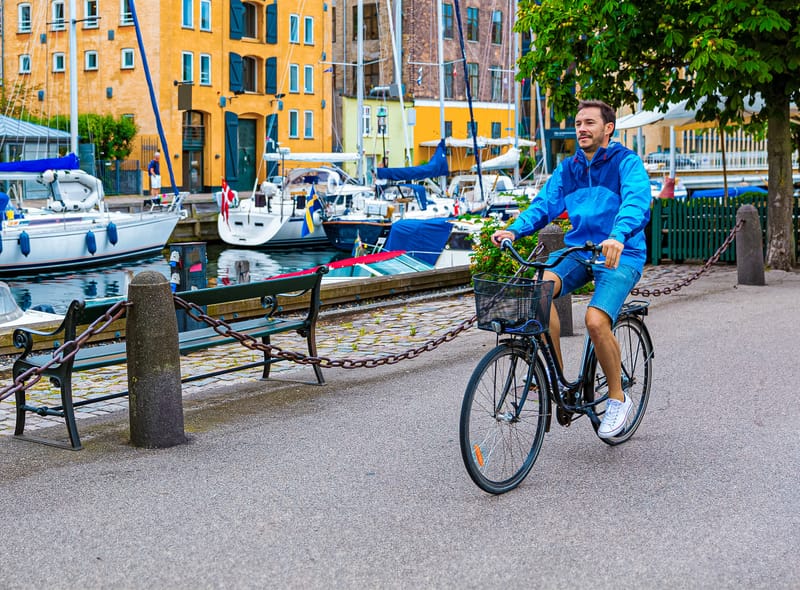
Read the article aloud on your own or repeat each paragraph after your tutor.All Green Lights: How Copenhagen Puts Bikes FirstSome mornings when you're driving to work or school, it feels like every traffic light is red — the lights are never green when you want them to be!
But some commuters in the Danish capital of Copenhagen have a different experience.
Traffic light after traffic light is green as you travel into the center of the city — as long as you're riding a bicycle.
This is called the "green wave," and it's designed to help cyclists get into the center more quickly.
Here's how it works.
Traffic lights are synchronized so that a cyclist traveling at 20 kilometers per hour will get a series of green lights.
There are little LED lights on the ground on some routes that tell cyclists they can expect a green light ahead.
This is not a new system in Copenhagen. The idea is actually more than 20 years old, but it's now set to be expanded to more routes around a city that's been called the most bike-friendly in the world.
In the early years of the "green wave," it was shown to cut travel time for cyclists by 17%.
In the morning, the lights are synchronized to prioritize people going into the city, while they're synchronized to help people get out of town faster at the end of the day.
But the green wave is not perfect. Some people cycle too fast to benefit from the synchronized lights, while others don't pedal fast enough.
This is also a problem during rush hours, when there may sometimes be so many bikes that it's just too busy to cycle at 20 kilometers per hour, according to some residents.
Plus, if cyclists are favored at traffic lights, buses sometimes get stuck on red lights and take longer to get to their destination.
However, the aim of the green wave is clear: make it easier for people to leave their cars behind and travel in a greener way.
Discussion
Have a discussion based on the following questions.- What are your thoughts on Copenhagen's "green wave"?
- What are the most bike-friendly cities you've been to?
- How bike-friendly is your town or city? Has this changed over the years?
- Do you have a bike? If so, how often do you use it? If not, why not?
- Have you been to Copenhagen? If so, what did you think of it? If not, do you plan to visit Scandinavia someday?
Further Discussion
Have a discussion based on the following questions.- How long is your commute?
- Does your morning or evening commute tend to take longer?
- How do you usually pass the time on your commute?
- What is rush-hour traffic like where you live?
- Do you get frustrated easily when you're stuck in traffic?